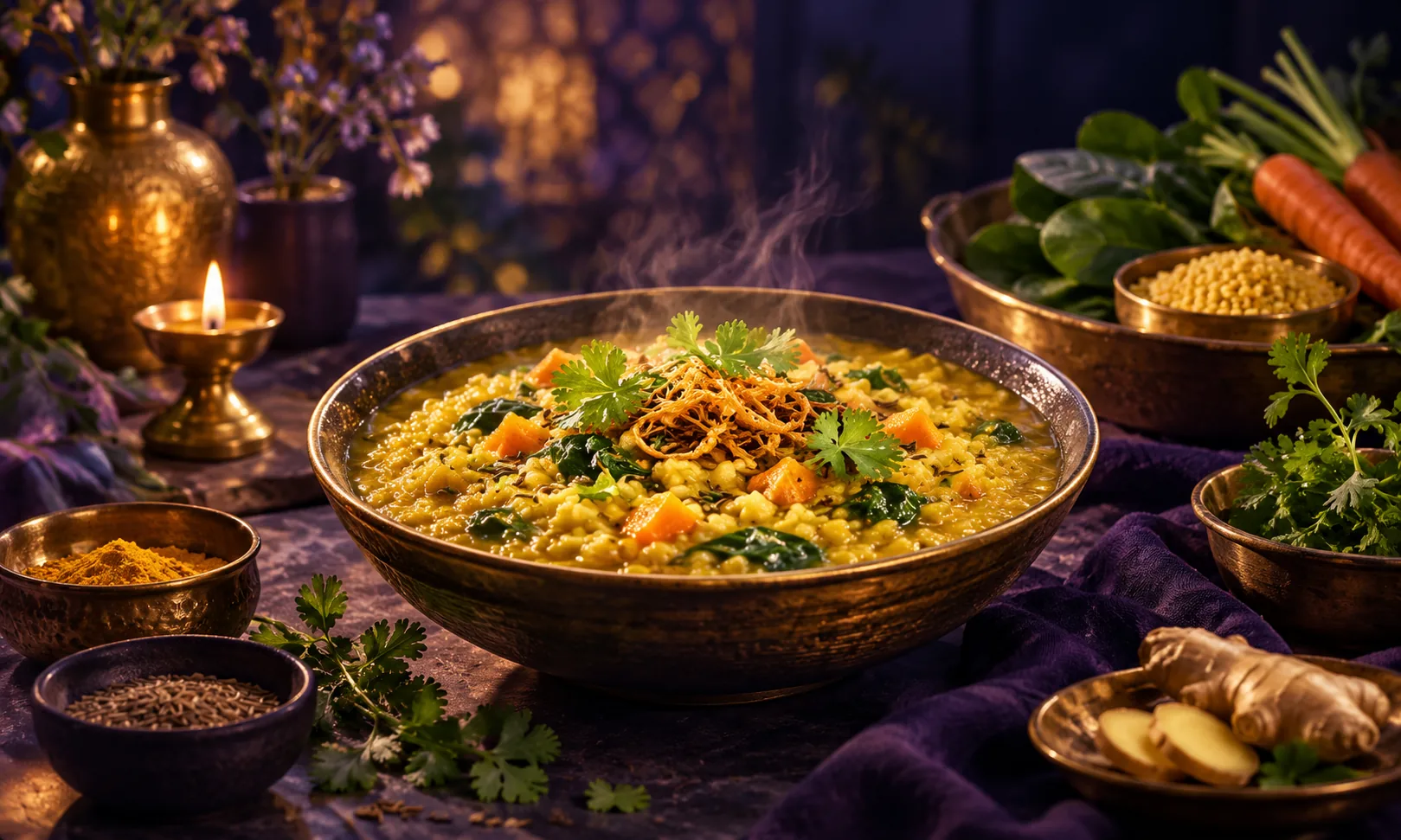
Eating for Your Dosha
The dosha lens turns general nutrition into personal strategy: the same lentil soup can ground one person and bloat another. These are the three core kitchen strategies — start from yours, then adjust by season and current state.
The Vata kitchen — warm, moist, grounding
Cooked over raw, moist over dry, warm over cold, spiced over bland, regular over erratic. Soups, stews, kitchari, root vegetables, good oils, warm milk, soaked nuts. The Vata enemies are crackers-for-lunch, iced smoothies, skipped meals, and eating on the move.
The Pitta kitchen — cooling, mild, unhurried
Sweet grains, sweet ripe fruit, coconut, cucumber, coriander, fennel, mint, moderate dairy. Flavor comes from herbs rather than chilli; sour ferments, fried food, alcohol, and "extra hot" are the slow leaks. Eat on time — hunger is Pitta's tipping point.
The Kapha kitchen — light, warm, awake
Well-spiced vegetables, legumes, lighter grains like millet and barley, pungent and bitter accents, minimal oil, honey over sugar. Eat when genuinely hungry, keep dinner early and light, and let ginger, black pepper, and movement be your daily medicine.
Examples
- Vata: gingered sweet-potato mash
- Pitta: coriander-coconut dal
- Kapha: millet upma
By dosha
Vata. Anchor phrase: warm, moist, oily, regular.
Pitta. Anchor phrase: cool, sweet, mild, on time.
Kapha. Anchor phrase: light, warm, spiced, early.
Educational Ayurvedic principles, not medical advice.