The Six Tastes (Shad Rasa)
Ayurveda organizes all food into six tastes — sweet, sour, salty, pungent, bitter, and astringent. Each taste has a predictable effect on the doshas, and a balanced meal touches all six so that no craving is left shouting.
How each taste moves the doshas
Sweet, sour, and salty are grounding and building — they calm Vata but, in excess, grow Kapha. Pungent, bitter, and astringent are light and drying — they cut Kapha but can deplete Vata. Pitta is cooled by sweet, bitter, and astringent, and inflamed by sour, salty, and pungent.
Why include all six
A meal containing every taste satisfies the body's full spectrum of signals. Persistent snacking and cravings are often just a missing taste — most commonly bitter or astringent in a modern diet — asking to be included at the meal itself.
The practical shortcut
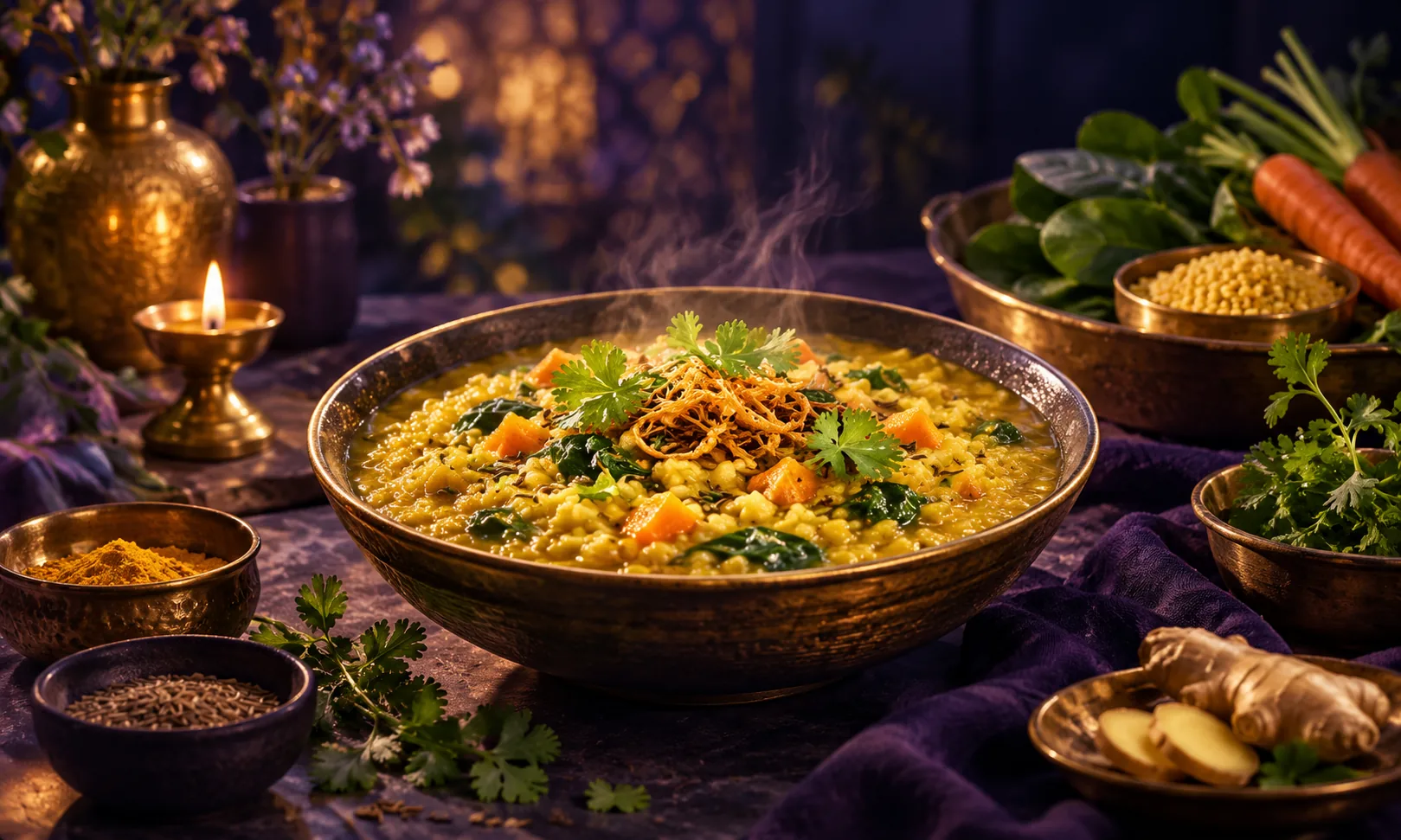
You don't need six dishes. One pot of kitchari with a squeeze of lemon (sour), a pinch of salt, ginger (pungent), leafy greens (bitter), and lentils (astringent) over sweet rice covers the whole spectrum.
Examples
- sweet — rice, milk, dates
- sour — lemon, yogurt
- salty — rock salt, seaweed
- pungent — ginger, black pepper
- bitter — leafy greens, turmeric
- astringent — lentils, pomegranate
By dosha
Vata. Lead with sweet, sour, and salty; keep bitter and astringent as accents, always cooked and oiled.
Pitta. Lead with sweet, bitter, and astringent; go easy on chilli, salt, vinegar, and fermented sours.
Kapha. Lead with pungent, bitter, and astringent; treat sweet, salty, and sour as condiments, not foundations.
Educational Ayurvedic principles, not medical advice.