Ayurvedic Kitchen
Diet basics to understand why, and dosha-keyed recipes so you can actually cook it.
Barley–Vegetable Soup
Light barley simmered with seasonal vegetables and warming spices — a classical grain for reducing Kapha and excess weight.
CCF Tea (Cumin–Coriander–Fennel)tridoshic
The everyday Ayurvedic digestive tea: equal parts cumin, coriander, and fennel seeds. Gentle for all doshas, sipped warm through the day.
Classic Kitcharitridoshic
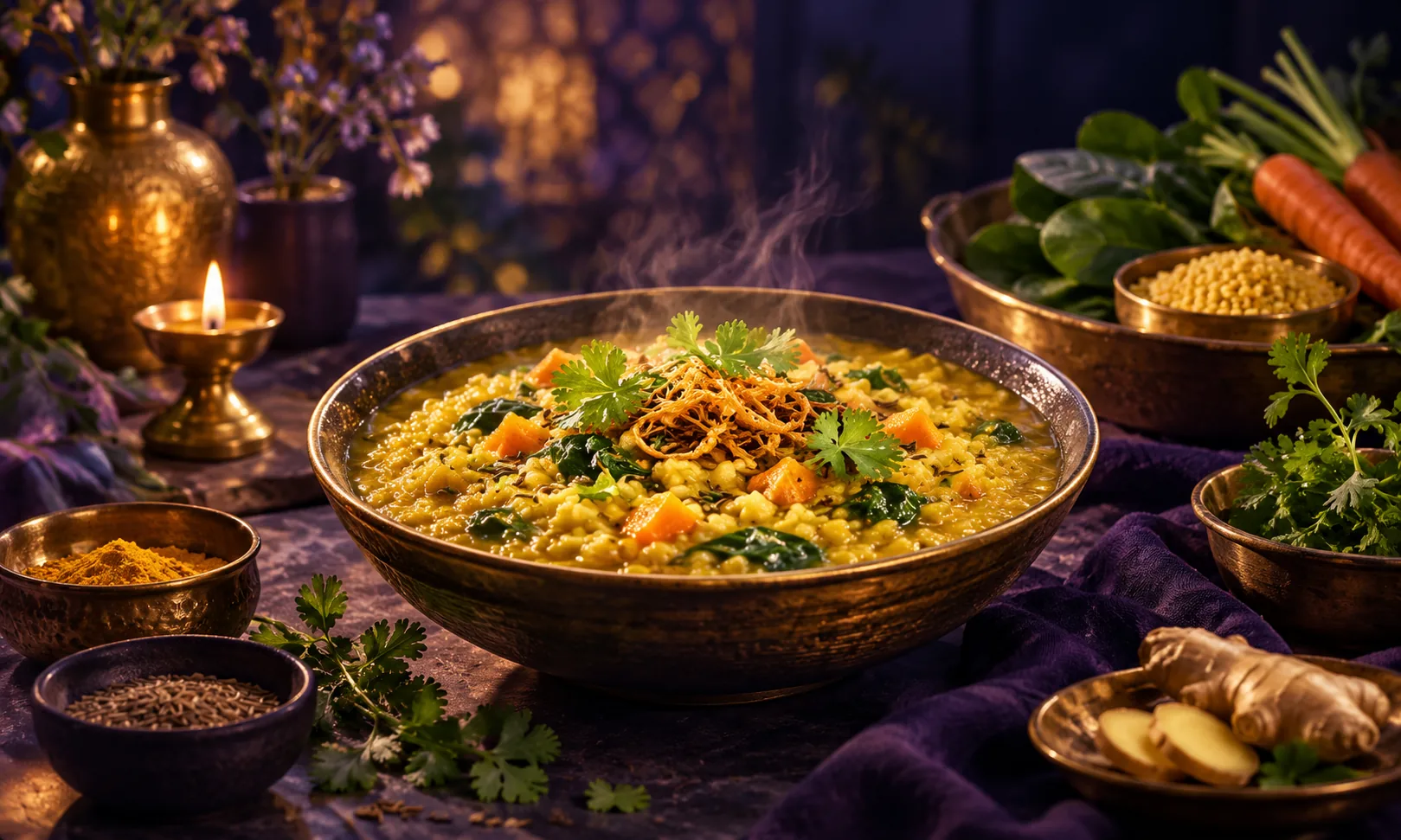
The gentle one-pot staple of Ayurvedic cooking: basmati rice and split mung dal simmered with digestive spices and ghee. Nourishing, easy to digest, and suitable for all three doshas.
Coconut Rice with Curry Leaves
Fragrant basmati folded with fresh coconut and curry leaves — a cooling, satisfying Pitta lunch for hot weather.
Cooling Coriander–Coconut Dal
Moong dal cooked mild and finished with coconut, coriander, and lime — a Pitta-calming lunch without chilli or sourness.
Cucumber–Mint Raita
Fresh yogurt with grated cucumber, mint, and roasted cumin — the classic cooling accompaniment for a Pitta plate.
Date–Almond Morning Shake
Soaked almonds and dates blended with warm milk and cardamom — a traditional ojas-building drink for depletion and convalescence.
Dry-Roasted Spiced Vegetables
Broccoli, cauliflower, and beets roasted with turmeric and black pepper — light, dry heat that suits Kapha perfectly.
Dry-Spiced Chickpea Snack
Chickpeas crisped with turmeric, cumin, and a pinch of chilli — a light, astringent snack that satisfies Kapha crunch cravings.
Fresh Ginger–Lemon Tea
Warming sliced-ginger tea with lemon — the go-to for cold, damp mornings and sluggish or irregular digestion.
Ginger–Carrot Soup
Silky puréed carrot soup warmed with ginger and cumin — grounding for Vata evenings in the cold seasons.
Gingered Sweet-Potato Mash
Sweet potato mashed with ghee, ginger, and cinnamon — pure grounding comfort for depleted, windy Vata days.
Golden Milk (Turmeric Milk)
Warm spiced milk with turmeric, cardamom, and a touch of ghee — a settling evening drink in the Vata-soothing tradition.
Grounding Vata Kitchari
Kitchari made extra warming and moist for Vata: more ghee, sweet root vegetables, and a hing-ginger tempering that settles gas and irregular digestion.
Homemade Ghee
Butter slowly clarified into golden ghee — Ayurveda's most treasured cooking fat, prized for carrying spices and nourishing tissues.
Kapha Spice Blend (Churna)
A hot, stimulating masala — dry ginger, black pepper, turmeric, cinnamon, and clove — to cut through Kapha heaviness and dampness.
Light Kapha Kitchari
A lighter, spicier kitchari for Kapha: less grain, more dal and vegetables, minimal oil, and a black-pepper–ginger kick to cut heaviness.
Millet Upma with Vegetables
A light, savory millet breakfast tempered with mustard seeds, curry leaves, and ginger — excellent for Kapha mornings.
Mint–Coriander Summer Cooler
Fresh mint and coriander blended with lime, a pinch of rock salt, and cool water — hydration for high-Pitta afternoons.
Morning Stewed Applestridoshic
Soft clove-spiced stewed apples — the classic gentle Ayurvedic breakfast starter that suits every constitution.
Pitta Spice Blend (Churna)
A cooling masala — coriander, fennel, cardamom, turmeric, and dried mint — that flavors food without adding fire.
Quinoa–Vegetable Pilaf
Fluffy quinoa with zucchini, carrot, and gentle spices — a light, protein-rich lunch that works for Pitta and Kapha.
Rose–Cardamom Sweet Lassi
A midday yogurt cooler with rose water and cardamom — refreshing for Pitta in the summer heat.
Sesame Wilted Greens
Dark leafy greens wilted in sesame oil with garlic and a squeeze of lemon — warming minerals for dry Vata constitutions.
Simple Moong Daltridoshic
Everyday split-mung dal with turmeric and a cumin-ghee tempering — the most digestible legume dish in the Ayurvedic kitchen.
Simple Rice Congee (Peya)
Rice slow-simmered in extra water to a silky porridge — the traditional convalescent food when digestion needs maximum gentleness.
Stewed Pears with Cardamom
Juicy pears gently stewed with cardamom — a cooling, moistening treat that soothes Pitta and satisfies a sweet tooth cleanly.
Takra (Spiced Digestive Buttermilk)
Thin churned buttermilk with roasted cumin and ginger — the classical after-lunch digestive, far lighter than yogurt itself.
Vata Spice Blend (Churna)
A warming, grounding masala — cumin, ginger, cinnamon, cardamom, and a touch of rock salt — to sprinkle on any Vata meal.
Warming Red-Lentil Dinner Dal
Quick red lentils with turmeric, ginger, and black pepper — an easy, warming early dinner for Kapha and Vata in cold weather.
Warming Spiced Mung Soup
A brothy whole-mung soup with ginger, black pepper, and greens — a light Kapha-clearing dinner.
Warm Spiced Oatmeal with Ghee
Creamy cooked oats with cinnamon, cardamom, and soaked dates — grounding for Vata, soothing for Pitta.
Educational Ayurvedic cooking guidance, not medical advice. Check the allergen line on every recipe, and talk to a clinician before changing your diet around a diagnosed condition.